
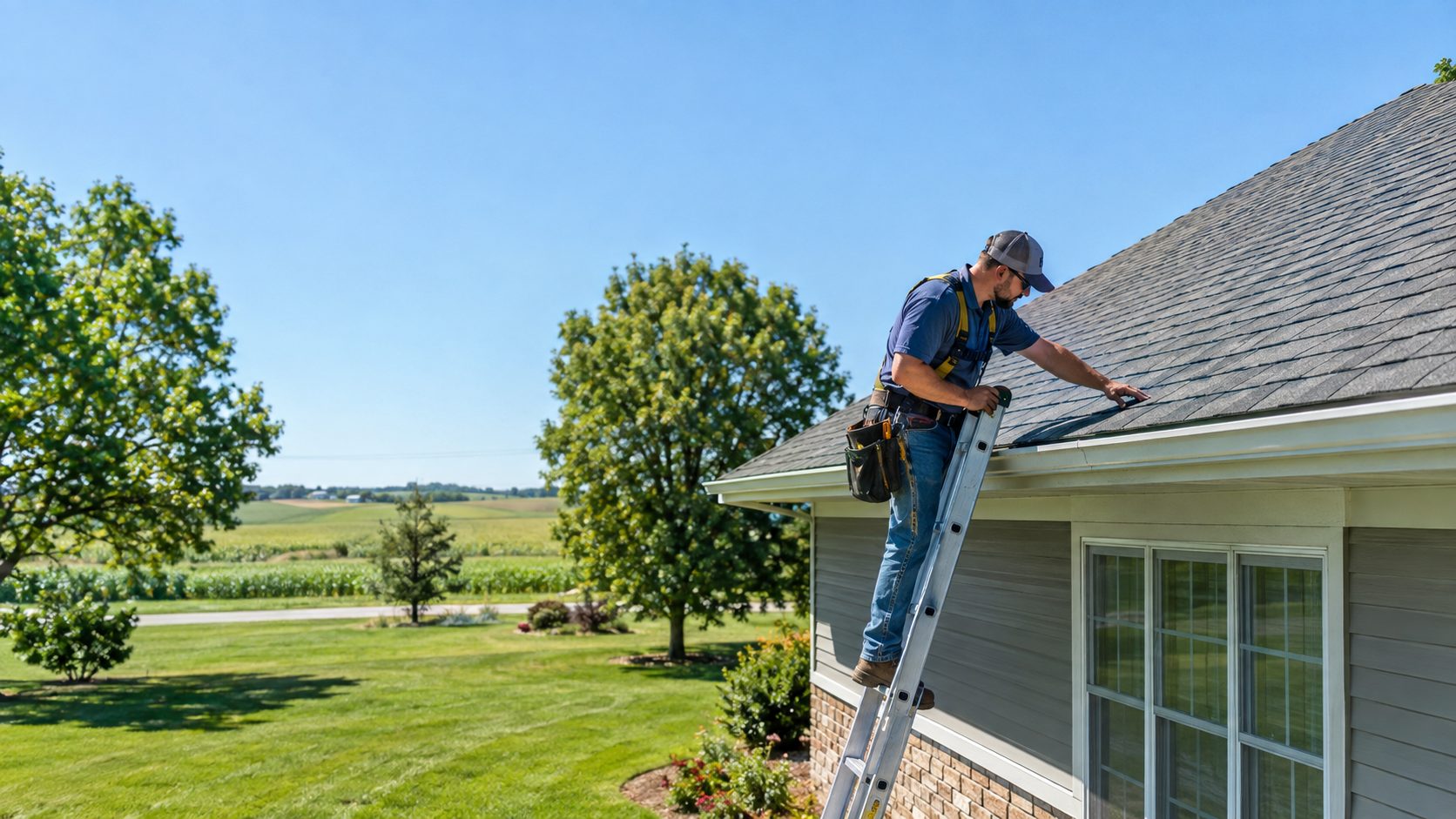
Find roofing contractors serving Evansdale, Iowa for storm checks, leak repairs, and roof replacement estimates. Share details about your project to compare choices for your home.
Call now Request Roofing QuotesRoofs in Evansdale face challenges beyond typical rainfall. Hail and high winds can dislodge shingles or damage flashing, while heavy snow and ice dams can cause trouble at roof edges. Some issues cannot be seen from ground level, so a thorough review after storm season may help show what needs attention. Homeowners can use this referral website to find roofing contractors who work locally and request estimates based on the roof's condition.
A roofing professional can look over shingles, flashing, vents, valleys, and other parts of the roof for visible wear or damage. If you notice a ceiling stain, a damp attic, or shingles scattered after a storm, describe what you have seen when requesting an estimate. A roof inspection does not automatically mean you need a replacement. It can help distinguish a small repair from a wider issue and give you a clearer scope to review before deciding what to do next.
Evansdale homes vary in age, roof shape, and exterior materials, so the right scope depends on the individual property. A nearby roofer may assess the roof from outside and, where appropriate, look for signs of moisture or ventilation trouble inside. The website connects homeowners with contractors serving Evansdale; the contractor can explain their findings, materials, and proposed work. Ask for those details in writing so you can compare the estimates and understand what is included.
Evansdale’s housing includes established homes with straightforward pitched roofs as well as properties with additions, dormers, or roof sections built at different times. On an older home, layers of past repairs can make it harder to see where water is entering. Roof valleys, chimney areas, and wall intersections deserve close attention because flashing there must direct water away from the structure. A roofer can check those transitions and the condition of shingles, rather than treating every stain or loose shingle as proof that the entire roof needs replacement.
Storm exposure matters in Evansdale and nearby Waterloo. Hail may dent or crack shingles, while high winds can raise their edges or shift ridge caps. Heavy snow and ice dams can trap water near the eaves, particularly when attic airflow and insulation are poorly balanced. Seasonal temperature swings and freeze-thaw cycles can make small openings more consequential over time. After a storm season, consider an inspection if you see visible damage or water marks. Take notes and photos from the ground, and stay off a wet or icy roof.
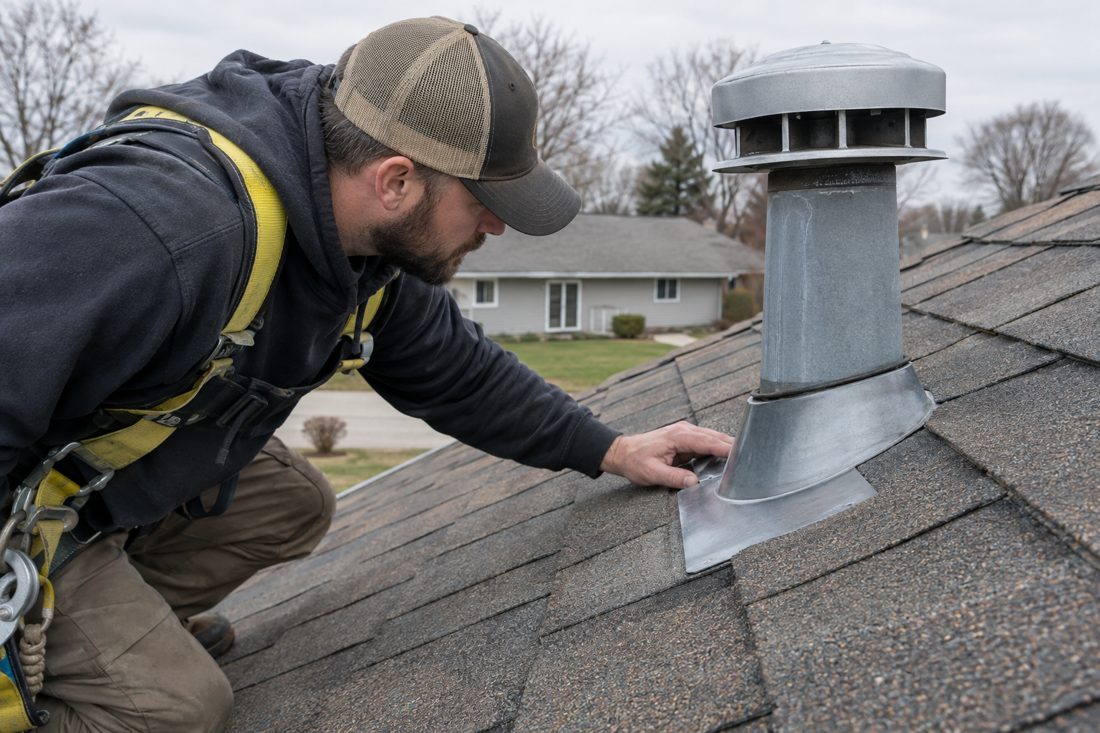
Regular roof checks may reveal missing or loose shingles, deteriorating flashing, blocked drainage routes, and other noticeable issues. Ask the contractor to explain which findings need prompt attention and which can be monitored. A written summary helps you keep track of roof condition and plan work without guessing.
After hail or high winds, a roofing professional can inspect visible sections for impact marks, lifted shingles, damaged vents, or flashing that has shifted. Share the date of the storm if you know it and any signs you noticed afterward. Keeping records could help when discussing damage with your insurer.
When repairs stop making sense, review replacement bids specifying shingle type, underlayment, flashing, ventilation, old-roof removal, and cleanup. Many homes have architectural asphalt shingles. For added hail resistance, homeowners can choose pricier Class 4 impact-resistant shingles.
A ceiling stain can come from a roof opening, flashing problem, or water traveling from another area, so tracing the source matters. Contractors may also review gutters and attic airflow when investigating moisture or ice-dam concerns. Ask what repair is proposed and how the work addresses the cause.
Replacing the roof on an average single-family home with architectural asphalt shingles usually costs $9,000 to $18,000. Costs depend on roof size and pitch, how many existing layers need removal, and whether crews find damaged decking. The written work plan may also be affected by flashing, ventilation, access, and cleanup. A new roof with Class 4 impact-resistant shingles may cost roughly 10 to 25 percent more. Ask your insurer whether those shingles qualify for a discount; eligibility and savings vary by policy. Minor leak repairs often cost $300 to $1,200, based on the source and extent of the damage. Compare itemized estimates and confirm storm coverage and deductible terms with your insurer.
Consider an inspection if you see missing shingles, marks, debris, or signs of water indoors after a storm. Some damage is not visible from the ground, and climbing onto a roof can be unsafe. For a home in Evansdale, a contractor can review visible conditions and record observations for your files.
Snow buildup and ice dams can cause water to back up near the eaves, particularly when freezing conditions last and roof or attic conditions are unfavorable. A roofer can check the roof edge, drainage, and signs of moisture, and may discuss ventilation concerns. Addressing the source is more useful than covering an interior stain alone.
Make sure every bid spells out the roofing products, tear-off, flashing, ventilation, any decking allowance, and debris removal. A roof's pitch and ease of access can affect the work, so ask contractors to explain quote differences instead of focusing only on price. For a storm claim, confirm policy terms and deductible with your insurer.
Let the contractor know what is wrong with the roof, whether a recent storm caused damage, and what you want inspected or priced.