
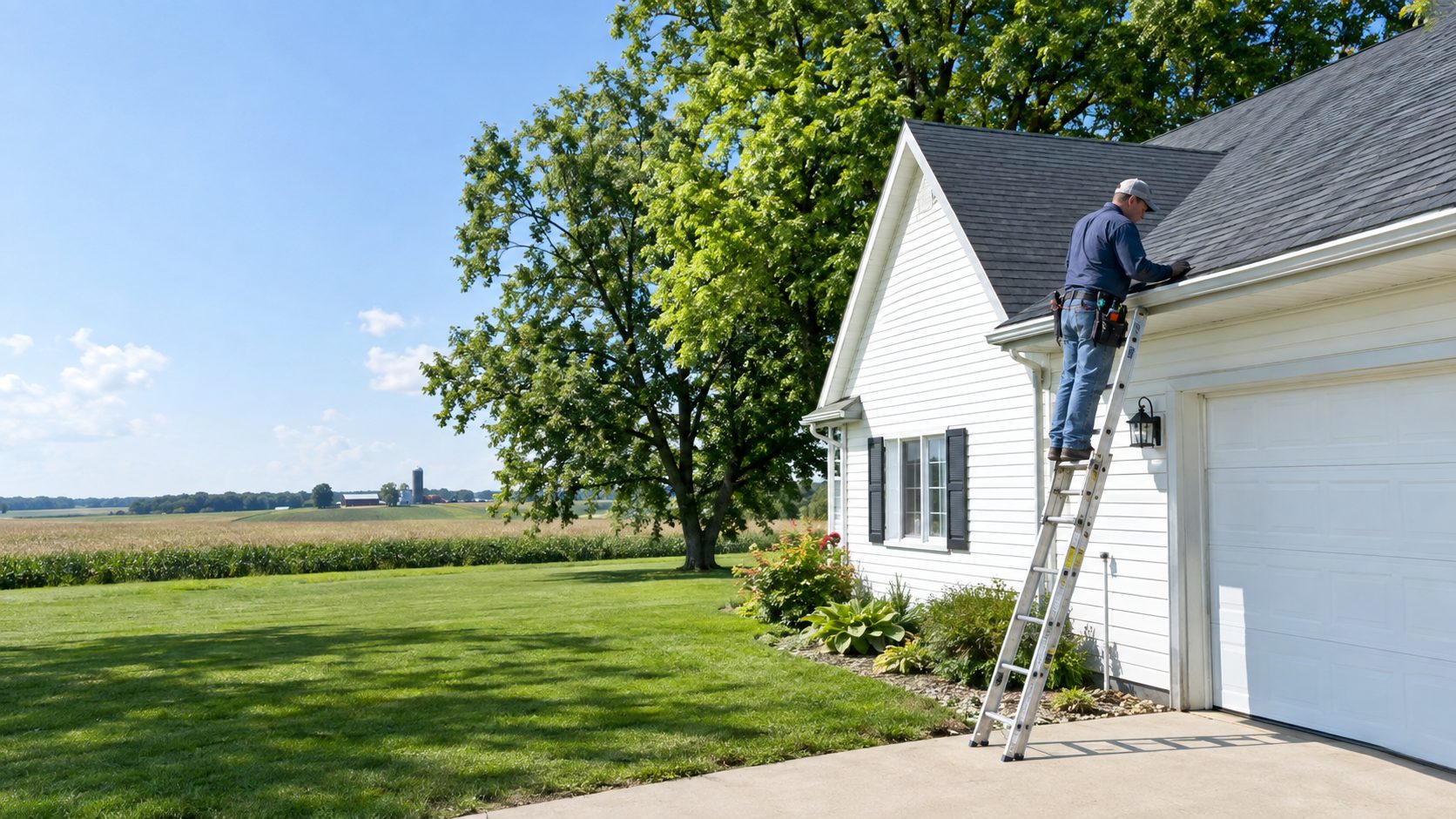
Homeowners in Walker, Iowa can find roofers for inspections, storm-damage assessments, leak repairs, and replacement estimates suited to their homes.
Call now Request a Roofing QuotePeople in Walker can use this referral website to locate roofing contractors who serve their area. A roofer can inspect shingles, flashing, vents, gutters, and other details to help identify damage or wear. That can be useful after hail or strong winds, or when a stain appears indoors and the source is not obvious. The site helps you request information from local contractors, but each contractor provides their own assessment, estimate, and work plan. Describe what you have noticed so the right questions can be addressed during the estimate process.
Roofs in Walker, IA face changing conditions through the year. Hail and derecho-strength winds can bruise shingles, loosen edges, or shift flashing, while freezing winters and repeated freeze-thaw cycles put stress on roof details. Snow and ice may conceal a small leak until moisture appears in an attic or on a ceiling. A roof may look intact from the ground even if a vent boot or shingle has been damaged. A professional inspection can help distinguish storm damage from ordinary aging and identify repairs before the next season.
A nearby roofer can assess a small leak, document visible storm damage, or prepare a full replacement estimate. When comparing options, find out which materials the price covers, how existing layers will be handled, and whether the estimate accounts for hidden decking damage. Contractors may also discuss ventilation and drainage improvements when those details affect roof performance. This referral service connects homeowners with roofing crews serving Walker, but does not promise a particular contractor or result. Share your roof concern through the quote form to begin comparing possible next steps.
Homes around Walker range from rural houses and farmsteads to more compact homes near town. Roof age, slope, additions, and earlier repairs vary by property, so a contractor should assess the specific roof rather than use a standard estimate. Trees near a house may drop branches or leaves onto roof edges and gutters, while more open sites can leave roof surfaces exposed to strong gusts. Have the roofer examine valleys, flashing, vents, and joints between roof sections during the inspection.
Homes in Center Point and rural Linn County contend with hail, derecho-strength winds, and long, freezing winters that can strain roofing materials and connections. In Walker, wind can loosen shingles or reveal weak areas, while hail may leave marks that are hard to assess from the ground. Freeze-thaw weather can make existing gaps more troublesome, especially around flashing and roof penetrations. If water appears inside, note when it happens and where the stain forms. That information can help a roofing contractor trace the leak without assuming the visible spot is directly beneath the roof opening.
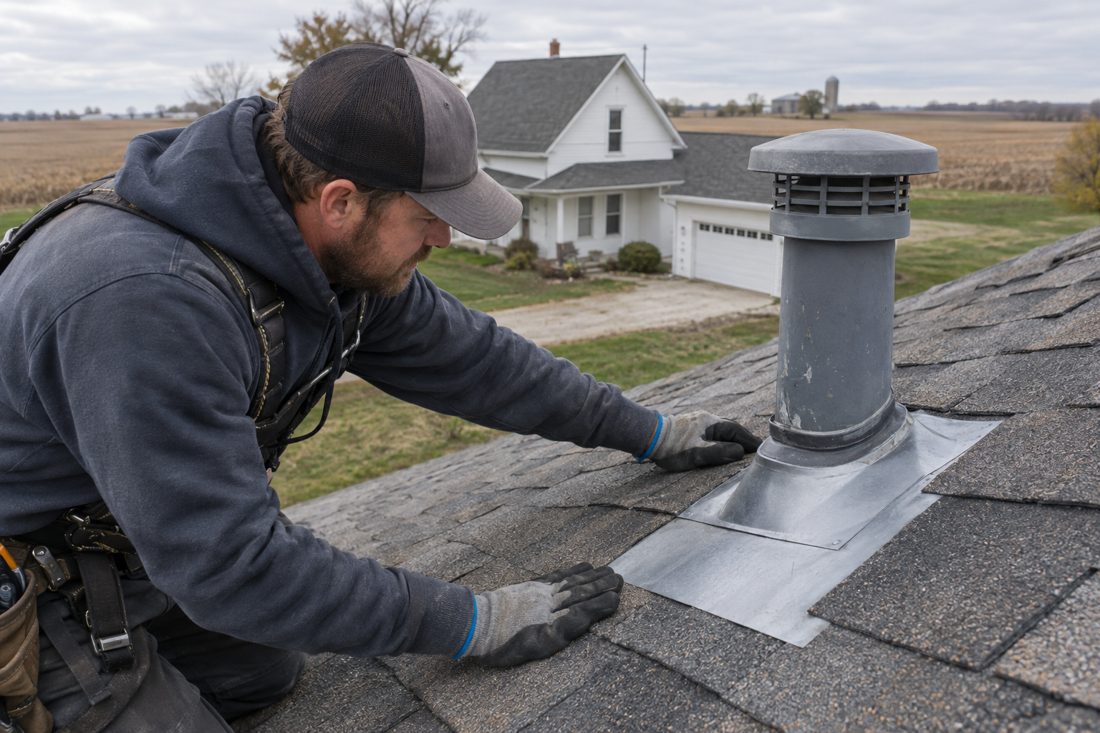
A roofer can look for worn or missing shingles, loose flashing, damaged vent seals, and signs of trouble around valleys and roof edges. Periodic inspections are especially helpful after severe weather or as a roof gets older. Request a written report to determine which issues need prompt attention.
After hail or strong winds, a roofer can check for impact marks, lifted shingles, and displaced sections. Photographs and written notes provide a useful record of the roof's condition. Damage and insurance coverage are not the same thing, so confirm claim decisions with your insurer.
When repeated repairs stop making sense, contractors can quote a full roof replacement using architectural asphalt shingles or other appropriate materials. Compare the scope, tear-off details, underlayment, flashing work, ventilation, and cleanup in each proposal. Ask what happens if the crew finds damaged decking after the existing roof layers are removed.
A ceiling stain may appear far from where water entered, so finding the leak can require more than replacing the shingle above the stain. A roofer can inspect flashing, roof penetrations, valleys, and nearby drainage details, then explain the repair and any follow-up work that may be needed.
Replacing the roof on a typical single-family home with architectural asphalt shingles often costs between $9,000 and $18,000. The total depends on roof size and slope, how many old layers need removal, and whether the decking requires work. A minor repair may cost between $300 and $1,200, depending on the leak and the work required. Opting for Class 4 impact-resistant shingles may raise material expenses by about 10 to 25 percent. Have the quote list the main tasks separately from possible added charges, and check with your insurer about any potential insurance discount. If storm damage is covered, the homeowner generally pays the deductible, but coverage varies by policy and claim.
Clues may include missing or raised shingles, loose flashing, and dents or marks, though ground-level viewing may not reveal all damage. A roofer can inspect your roof and document visible conditions. Keep photos or notes about when the storm occurred, and ask your insurer about its inspection and claim process.
It depends on the roof's condition, not just the season. If shingles are missing, leaks are active, or flashing has failed, ask a roofer to assess the urgency and possible temporary measures. For an older roof without an active leak, a written inspection can help you plan and compare replacement estimates.
Some contractors can provide photos and written observations of visible roof conditions, which may help you organize claim information. They cannot determine what your policy covers or guarantee an insurer's decision. Ask what documentation is included in the estimate, then discuss the claim directly with your insurance company.
Explain your roofing concern, recent storm effects, and where you spotted a leak so contractors can suggest relevant next steps.